The South African Figure Skating Association (SAFSA) has added its voice to growing concern across the sports community following news that national federations will face major funding cuts and that it seems SASCOC itself will receive no government funding.
“This is deeply worrying,” says SAFSA President Christo Viljoen. “We all want to see South African athletes compete and win on the world stage. But that kind of success does not happen by chance. It starts with development, coaching, and real support at the grassroots level. For that, federations rely on stable funding.”
Viljoen says while SAFSA understands that budgets are tight, slashing support undermines the long-term goal of building winning teams and athletes across codes.
“Smaller sports especially cannot absorb these cuts without serious impact,” he says. “We are calling for a constructive conversation with government to find a way forward.”
He adds that SAFSA fully supports SASCOC’s efforts to engage urgently with the Minister of Sport. “We stand with all sporting codes in asking for fair and consistent investment. Without it, we risk losing a generation of young athletes.”
Balancing school, skating, and a packed training schedule is no small feat. But for 9-year-old Alexia Easom, it’s all part of the journey. After claiming two titles at the 2025 SAFSA National Championships (one in singles and the other in solo dance), Alexia says the wins were both joyful and humbling.
“I felt proud, excited and happy,” she says. “Winning at Nationals is always special. I was just glad I performed well.”
While she treats solo dance more as a developmental space to improve her skating edges and artistry, it’s clear where her heart lies: “My favourite is figure skating, because I like the jumping part.”
Alexia’s versatility across disciplines reflects a broader commitment to mastering her craft. In fact, her background in ballet, strong coaching, and an edge-focused training approach made the transition to solo dance relatively smooth. Still, each discipline requires its own rhythm. “Figure skating is more structured with a focus on building up to my big jumps,” she explains. “Dance is more about flow, movement and edge work.”
Her growing competition experience extends well beyond South Africa. In 2024 and early 2025, Alexia competed internationally, notching her first overseas win in Slovenia and breaking the 30-point mark for the first time.
“Some competitions went really well, others didn’t,” she says honestly. “In Sofia, I had a bad skate and felt really upset. But I learned that even great skaters have off days. That doesn’t mean you’re a bad skater.”
That mindset, mature beyond her years, has been shaped by experience, family, and faith. A typical day sees her on the ice by 7am, schooling mid-morning, then a rotation of ballet, off-ice training, or conditioning in the afternoon. Evenings are reserved for family time, church, or Brownies (Girl Guides).
“There are hard days,” she admits, “but my family is always there for me. They encourage me and help me focus on the good.”
Looking ahead, Alexia’s goals are ambitious. She wants to land her double axel in competition, win another international event, and qualify for her first ISU solo dance competition in Paris. Longer term? She’s aiming for the Olympics in 2034.
And off the ice?
“I read a lot. I just finished the 11th book in my Diary of a Wimpy Kid set,” she says with a smile. “I also love playing darts with my family and hanging out with my friends.”
Though she doesn’t name a specific role model, she watches Ilia Malinin when she can and follows South African skaters overseas. But perhaps her biggest inspiration is right at home.
“I couldn’t have done any of this without the support of my coach, Barbie Hawkes, and my dad.”
For most competitive figure skaters, a year without competition might seem like a setback. But for Cape Town student Mikhail Ajam, the past season has been a lesson in patience, perspective, andthe rarely spoken challenges of finding the right partner in ice dance.
At eight years old, Mikhail’s first experience on the ice came during a birthday party. He wanted to try hockey but was advised to learn to skate first. He joined the Junior Blades Figure Skating Club and quickly fell in love with the precision and discipline of figure skating. “There was something about the technique that just stuck with me,” he says.
From singles skating to synchro and eventually ice dance, his journey has never followed a straight line. “I was playing catch-up for years,” he reflects, pointing to struggles with his axel jump and a late start compared to many peers. “But when ice dance was introduced, something clicked. It became my discipline.”
His love for performance came early. “Matthew Samuels was my role model. His programs weren’t just technical but entertaining as well. That’s what I wanted my skating to be.”
While Mikhail went on to compete at the Junior Grand Prix and represent South Africa internationally, this past season brought a different kind of challenge: being partnerless.
“It’s not something people talk about often,” he says. “But finding the right partner in ice dance is incredibly difficult. You need physical compatibility such as height, strength, and stamina. However, you also need mental alignment, shared goals, communication, and trust. Chemistry matters. And you only really know if it’s there after hours on the ice together.”
It’s also become harder, Mikhail explains, with more female skaters opting for solo dance. “There’s this perception that boys get to choose. But that’s changing. With solo dance becoming more popular, and eventually being recognised at ISU level, girls don’t need to wait for a partner anymore. That means the pool is shrinking. For someone like me, it adds pressure to find the right fit and soon.”
Still, he remains hopeful and focused. “My biggest goal right now is to form a strong, compatible partnership. From there, I want to qualify for Nationals, return to the Grand Prix circuit, and ultimately compete at Worlds, Four Continents, and even the Olympics.”
Off the ice, Mikhail is equally thoughtful. Living with ADHD and General Anxiety Disorder, he’s learned to embrace what once made him feel different. “For a long time, I was scared people would judge me. But I realised I can’t hide who I am. Music helps me manage the noise in my head, and skating gives me purpose.”
He also jokes that he doesn’t really have a personal life: “While my friends are partying, I’m going to bed early. But it’s a choice. I do find time to see friends and family, but skating comes first.”
Looking ahead, his ambitions are clear but so is his sense of self. “Skating has taught me to be more adaptive, to train smarter, and to find the artist inside me. It’s more than a sport. It’s part of who I am.”
And his message to younger dancers still searching for the right partner?
“Don’t force it. If something feels off, trust your gut. You have to be able to rely on your partner, not just on the ice, but everywhere you go. Find someone who shares your vision and values. That connection is everything.”
For most competitive skaters, the journey begins not long after they can walk. But for Mathilda du Plessis, it started with a promise.
“I was a very stubborn child,” she laughs. “Even at birthday parties, I refused to skate. But I promised my best friend I’d try for her 11th birthday. From the moment I stepped on the ice, I fell in love. The freedom, the thrill, the wind in my hair, it became more than a sport. It became an obsession.”
Starting late in a sport, where most of the girls in her section started at ages between two and 7 years old, is no small challenge. But Mathilda defied every expectation with quiet determination, tireless work ethic, and deep faith.
“I was told I wouldn’t make it because I started too late,” she says. “But I knew with hard work, and by the grace of God, I could. I had to prove it to myself and others.”
And she did. With relentless training (up to six hours a day, five days a week) she climbed the competitive ladder, qualifying for Nationals in singles, ice dance, and synchro.
Coach Konrad Giering of Evolution on Ice has watched her journey unfold.
“Mathilda stands out not just as a skater, but as a person. She brings a calm, supportive energy to every session. She leads with quiet consistency and always uplifts those around her. Her journey proves that passion and persistence matter more than when you start.”
The road hasn’t been easy. In one defining moment, Mathilda qualified for High Performance by skating two clean programs back-to-back in a single test. This is something she once thought impossible.
“I had a complete meltdown before that test,” she recalls. “But the morning I stepped on the ice, I had this quiet peace. I just let the music carry me.”
Now a first-year psychology student, Mathilda has shifted her focus from singles skating to ice dance and synchro, disciplines she says feel less pressured and more expressive.
“I love the freedom of embodying different characters through music. And being part of a team, especially travelling overseas with Gauteng North’s synchro team, has been such a bonding experience. This year, I’m team captain and it’s teaching me so much about leadership.”
That leadership extends beyond the rink. As an athlete representative and TAP coach, she uplifts younger skaters with encouragement, focus, and positivity.
“I do my best to be a role model. I remind skaters that they’re competing against themselves. So, just focus on your own growth.”
She credits skating for shaping her off-ice life too.
“It’s taught me discipline, grit, and time management. My motto has always been: ‘Your attitude determines your altitude.’ I carry that with me into everything I do.”
Now giving back to the sport that shaped her, Mathilda finds joy in coaching.
“There’s nothing better than seeing a skater reach a goal they’ve worked so hard for. It’s a full-circle moment.”
Looking ahead, her goals are clear: passing her inter-gold and gold tests, qualifying for Nationals in her new Junior Ladies ice dance category, and staying involved in coaching long-term.
“I’m most proud that I never gave up. I hope my story shows other skaters that it’s never too late to start. If you’re willing to put in the work, anything is possible.”
Her exceptional performances at the South African Figure Skating Association’s (SAFSA) recent National Championships in Johannesburg, not only earned Felicity Chase the award for the Most Impressive Performance at Nationals 2025, but also the honour to be the face of SAFSA for the 2026 season.
No stranger to figure skating, Felicity — who turned seventeen on 17 June — has been skating since age 5, following in her sister Katherine’s footsteps. She joined the Junior Blades Figure Skating Club at the Grand West Casino’s Ice Station in Cape Town and immediately fell in love with the sport.
It was not until 2017, however, that she started to compete in local and national competitions, representing Western Province at various Inter Provincial Championships. The catalyst to take her sport to another level, was her first place in both Component and Free in the Pre-Novice category at the 2021 Gauteng Inter-provincials and placing First in the Component and 2nd in the Free at National Championship in the same year.
She was also excelling in classical dancing. This excellent grounding proved most beneficial when she decided to move from single skating into the then new discipline of Ice Dance.
Since solo ice dance had at that stage not yet taken off in South Africa, Felicity decided to try couples ice dance. After two seasons of competing both locally and internationally, she decided to move to solo ice dance, more so because SAFSA now recognised it as a competition division.
With her ballet background and stage presence, she has managed to integrate her love for both sports into mesmerising displays of musical interpretation and excellent skating skills.
What was her reaction when winning the awards? “At first, I did not even comprehend that they had called my name. It was only when my mom said: ‘Flee that’s you!’ that reality dawned on me. My two performances and the scores I received, was already more than enough for me.”
She says her main goal is that the audience and judges should enjoy her performance. “I like to see it as a ‘break’ for them from the competition. I really try hard with facial expressions and looking directly at the judges. I run my programme a lot during practices to make the timing of my elements and movements fit with the music.”
Felicity admits there were many moments when she wanted to give up solo figure skating. “However, with solo dance, I haven’t so far wanted to give up. As much as it is hard work, I truly love figure skating. It is sometimes a bit hard to get up early in the morning, especially during hectic school time, but once I’m on the ice I feel ten times better. When things don’t go as well as I wanted, I just remind myself why I am skating and how the reward will feel after the hard work.”
“I struggled a lot emotionally after skating overseas and seeing the talent and amazing skaters,” she adds. “Logistically it’s also tough. I am in Grade 11 at Springfield Convent, so managing schoolwork, friends, family and figure skating is very challenging. I wouldn’t trade it for anything in the world though.”
Her advice to young skaters? “Figure skating is a beautiful sport, but what makes it better is if you do it because you love it. The goal does not always have to be to go to the Olympics. If that is your goal, then go for it. But remember that figure skating can also be a sport that you choose to do like any other one. Wanting to work hard at this sport, does not mean you have to give up your life for it. Figure skating should be something you choose to do, not because you are forced to do it.”
Felicity gives credit to her parents and coaches for what she has achieved so far. “My parents have been with me through my ups and downs. They have held my hand no matter what, even during my grumpy teenage phase.
“My coach, Barbara Ann Hawks, has worked with me since I was just able to walk on ice and has played a crucial role in making me the skater I am today. With the help of Oleksii Ishchenko, who makes sure my movements can be seen from all angles, she choreographed both my programmes. Barbie has also helped me with both the way I present myself on the ice and the technical details of each element.”
“Coach Megan Allely Painczyk helps me with my power, edges and especially my combo spin that drives us both insane! There is coach Vage Evetts who never fails to make me laugh. Coach Lisa Stigant is always my rock and helped me find my love for the sport again. I also have an off-ice coach, Caryn, who helps me with fitness and strength, along with being my built-in psychiatrist. And finally, my entire family, who always come to support my competitions in Cape Town and my friends who keep my schoolwork while I’m at competitions.”
“A special thanks too, to Michelle Cilliers who has designed and made all my beautiful costumes over the years.”
Her short-term goals are to compete at the Epinal Solo Dance International in France in December 2025 and to pass skills level 5 by the end of the Season. “I would also like to get a personal best at the Western Province championships. I still have a lot to improve. Success to me is focusing on all the levels needed for my elements, no matter how long it takes.”
After more than two decades representing South Africa at the highest levels of international figure skating, Neil Garrard is stepping down from the ISU circuit. This marks the close of one of the continent’s most distinguished judging careers, defined by technical excellence, integrity, and a deep commitment to the sport he has served since 1965.
“I am really sad,” says Neil Garrard. “I am going to miss all my friends and my skating family from all over the world.”
Neil Garrard’s own skating journey was cut short during the apartheid era when South Africa was sanctioned from international competition. But his passion for the sport never waned.
“Once skating is in the blood, it is hard to leave the sport,” he says.
As a judge, Garrard reached the pinnacle of his profession. Over the past 23 years, he has served as the only ISU-level judge on the African continent and remains the only South African to have judged at three ISU World Championships. His international judging résumé includes four Junior Grand Prix events, nine Junior World Championships, 14 Four Continents Championships, and three World Championships, with appointments across Europe, Asia, and North America.
“The highlight was definitely those three World Championships,” he says. “But there were so many incredible moments. I was lucky enough to judge some of the top skaters in the world.”
Behind the scenes, judging is both an art and a science.
“It is not as easy as people think. Judges award hundreds of marks per competition — 638 per judge when there are 50 skaters. So, accuracy, consistency, and fairness are essential. You have to come into every event without preconceived ideas, stay up to date with rule changes, and focus entirely on each performance.”
In total, Neil Garrard represented South Africa as a judge or referee in more than 50 international competitions, 14 Four Continents Championships, and nine Junior Grand Prix events. He completed judging appointments in Israel, Australia, the US, Canada, Iceland, Latvia, Russia, Ukraine, Croatia, Italy, Hungary, Bulgaria, Korea, Japan, Taiwan, Germany, France, the Netherlands, and many more. Furthermore, he attended several ISU congresses and numerous ISU seminars on various subjects to improve his knowledge of judging.
“Being an international judge is the best seat in the house. The travel is amazing, but it is also hard work. Judges attend seminars, do constant self-evaluation, and maintain their credentials through tests and local appointments. It takes years to get there, and you never stop learning.”
Neil Garrard is also passionate about mentoring future judges and uplifting the standard of judging in South Africa.
“Fairness, impartiality, and integrity are key. We need more judges who bring those values. And we must always support the skaters. Judging is not about putting them down; it is about helping them grow.”
Despite retiring from international events, Garrard will continue judging locally, although he notes the growing challenges of doing so.
“It is difficult. There is no reward, and there is constant criticism. People do not realise the time and effort involved. Judges take leave from work, sacrifice family time, and get no financial compensation.”
His commitment to skating development remains unwavering. Garrard was instrumental in introducing solo dance to South Africa and has long advocated for the adoption of the USFSA test structure, a system now formally adopted by SAFSA’s National Technical Committee.
“It took 25 years for the US to perfect that structure. Hopefully, we can benefit from their hard work and improve our basic skating skills to be internationally competitive.”
Looking back, he is proudest of the small, steady contributions he has made to judging, athlete development, and skating administration over the years.
“I have always tried to give honest feedback with my marks. Not every coach or parent sees it that way, but some do. And when they understand what we are trying to convey, it really helps the skater grow.”
His advice to new judges?
“Study. Watch videos. Do mock judging. Read the rules. Go to every seminar. It is a long road, but it is worth it.”
As for his legacy: “I was the only ISU judge in Africa for more than 20 years. I judged three World Championships. That’s something I am very proud of.”
And the sport he loves? “Figure skating is one of the toughest sports in the world. It demands physical ability, musicality, nutrition, off-ice training, and schooling. Discipline and commitment are the keys. And if I have helped any athlete or judge on their journey, then I have done my job.”
SAFSA thanks Neil Garrard for his decades of service, both internationally and at home, and for his unwavering commitment to fairness, excellence, and athlete development.
“On behalf of SAFSA, I would like to express our heartfelt appreciation to Neil for his hard work, unwavering dedication, and the pride with which he has represented South Africa over a distinguished career at the ISU level. His contributions on the international stage have been invaluable, and we look forward to continuing to benefit from his expertise here at home, as we work together to develop and inspire the next generation of South African figure skaters,” says Christo Viljoen, President of SAFSA.
The 2025 Advanced Novice High-Performance National title was never a certainty for 15-year-old Tristané Schmulian. In fact, Nationals almost didn’t even happen at all.
Plagued by injuries for much of the season and forced to adjust training, routines, and expectations, Tristané entered Nationals with the resolve of someone who had fought just to make it to the competition.
“There’s an element of surprise in winning this title,” she admits. “This season was really tough. So, there’s definitely a huge feeling of gratefulness, especially for all the support I received from my family, coaches, the medical team, sport psychologist, friends, and fellow skaters. I feel fortunate because I know how hard every other skater also worked.”
That mix of humility and determination defines her skating journey. Winning the national title, she says, is an acknowledgement that if you keep pushing and don’t quit, anything is possible.
“I learned that I do have perseverance and determination. This title isn’t just mine. It belongs to everyone who supported me. I’m just the one who got to wear the medal,” she says.
Behind the scenes, it took a team effort to get her to the finish line. Since November 2023, injuries have disrupted her jump work and forced frequent changes to her training regimen.
“An injury is also not just physically hard, it takes a huge mental toll as well.”
Despite the setbacks, she delivered a performance at Nationals that showcased not only technical strength but also emotional maturity.
“I’m really proud of my short program. When I started my skating career, I used to skate with my head down, focusing only on the ice. Now I love performing. I also landed both of my double axels. After struggling with my jumps all season, that was a massive achievement for me.”
Off the ice, her schedule is just as intense. Most days begin before dawn with early morning practice, followed by school, hockey, revue rehearsals, and late-night study sessions.
“It’s a balancing act,” she says. “But I’ve learned valuable time management skills, and I wouldn’t trade it for anything.”
There are moments of exhaustion, she admits, and days when it all feels a bit too much. But skating is her passion, and the drive to improve keeps her grounded. “I love this sport. Even though it’s demanding, it’s worth all the hard work.”
To unwind, she loves spending time in the kitchen (“I make flawless pancakes every time!”), shares laughs with her sisters or escapes into a Netflix series. “I’ve watched every episode of Friends multiple times. Joey is my ‘spirit animal’; I don’t share food either!”
Looking ahead, her goals remain ambitious. She’s focused on achieving the ISU international qualifying score in AdvancedNovice, and, when ready, hopes to move into Junior Ladies, once she’s nailed the required jump elements.
“I’ll follow my coach’s advice in this regard. I was unfortunately not able to work on triples this season due to injuries.”
What she is very sure of, is that she wants to stay in the sport for the long haul. She’s already begun shadowing to become a TAP coach and hopes to one day give back to the community that’s shaped her life.
“Skating has taught me to work hard, be resilient, humble, and confident. It’s part of who I am.”
And her message to other young skaters?
“Keep going. Even small steps move you forward. Believe in yourself. Listen to your coach! Work hard, on and off the ice. And never ever give up on your dream.”
Following her standout performance at the recent 2025 SAFSA National Championships, Junior Ladies Champion Jasmine Coetzee is making waves both locally and abroad. Her victory marks the next chapter in a journey that began on a small ice rink in Aktobe, Kazakhstan, and now points toward the 2030 Winter Olympics.
“Despite all the challenges this season, I was able to fight through my performance. The feeling is truly indescribable,” says Coetzee. “When I realised I had won, all I felt was a mix of relief, pride, and pure joy. It made every sacrifice worth it.”
At just five and a half years old, Jasmine first stepped onto the ice on a whim, and by age nine, she knew skating would be more than a hobby. Since then, her development has been shaped by international training stints in Canada and Russia, including five years at Champs International Skating Club under Megumu Seki and sessions with the renowned Angels of Plushenko. Today, she trains in Almaty, Kazakhstan, under Ilia Klimkin, supported by her South African coach Dino Quattrocecere.
“From the first time I saw her skate, I thought to myself, this child is going to be special,” says Quattrocecere. “She has champion material inside of her, and it would be my job to coax it out and make it shine.”
Coetzee’s recent Nationals victory did not come without obstacles. After two missed jumps in her free program, she pulled herself back into the performance with poise and resilience.
“That moment changed my entire perception of what she can attain,” Quattrocecere continues. “Many skaters would have thrown in the towel, but Jasmine is a fighter. She does not quit.”
Balancing elite training with her second-year college studies, focusing on sports and physical education has not been easy. But Coetzee has learned to manage time, stay focused, and thrive in high-pressure environments.
“It takes a lot of discipline to juggle academics and international travel, but I have learned to stay organised and centred,” she says.
Her success is the result of both technical discipline and artistic evolution. As one of the tallest junior skaters on the international circuit, Coetzee’s long lines and elegant presentation have become her signature style.
“We use her height to her advantage in choreography, while she works hard to ensure efficient rotations in her jumps,” says Quattrocecere.
Coetzee has her sights set on qualifying for Junior Worlds, narrowly missing the technical score by just 1.53 points last season. She and her coaching team are planning appearances on the Junior Grand Prix circuit and other key international competitions every four to five weeks leading up to the qualification cutoff.
“My short-term goals are to achieve a new personal best and deliver clean, confident programs,” she explains. “Qualifying for Junior Worlds would mean a great deal to me, to SAFSA, and to my coach.”
Her long-term dream? Competing at the 2030 Winter Olympic Games. It is a goal she shares with Quattrocecere, who himself represented South Africa at the 1994 Winter Olympics.
“With Jasmine, I truly see someone who can get there. We have started our roadmap to the Olympics, with clear short-, medium-, and long-term milestones,” he says.
A significant part of her success is owed to the support of her parents, Michael and Lola Coetzee.
“I give massive credit to her family. They have sacrificed tremendously to ensure that Jasmine has every opportunity to reach and exceed her goals,” says Quattrocecere.
Coetzee is motivated by her skating idol Carolina Kostner and embraces a training philosophy built on resilience and joy.
“Progress does not happen overnight. It takes patience, dedication, and a love for what you do. Never lose the joy of skating. That is when amazing things happen,” she says.
Outside the rink, she enjoys arts and crafts and spending time with friends and family. It is a balance that keeps her grounded as she prepares to represent South Africa on the global stage.
“She is not only a technically strong athlete but an intelligent and thoughtful competitor who absorbs instruction and thrives under challenge,” says Quattrocecere. “I could not be prouder.”
With her sights set on Junior Worlds, the Olympic Games, and everything in between, Coetzee is skating her way into history, one graceful, powerful stride at a time.
The South African Figure Skating Association (SAFSA) is proud to spotlight the outstanding contributions of Lisa Stigant, South Africa’s only ISU Technical Specialist, whose continued dedication has become an essential part of the country’s competitive figure skating landscape.
She has served as an international Technical Specialist since 2010 and was promoted to full ISU Technical Specialist status in 2022. Stigant represents South Africa at ISU-sanctioned competitions around the world, bringing international insight to every event she officiates. Currently based in the Netherlands, where she works as a coach for the TKV Club in Tilburg, Lisa’s relocation has enabled her to participate in and officiate at numerous international competitions, significantly expanding her experience and influence in the sport.
As the Head of the Technical Panel for SAFSA, Lisa is responsible for assembling all technical panels for Inter-Provincial events and the annual National Championships. Her leadership ensures that every competition in South Africa meets international standards. Beyond events, she plays a pivotal role in building capacity within SAFSA by training Technical Specialists in Singles and Pairs disciplines. She has spearheaded both online and in-person workshops with technical experts from Europe, laying the groundwork for consistent technical excellence at all levels of the sport.
Her impact goes even further. She continues to support the SAFSA National Development Team and was instrumental in bringing Italian coach Valter Rizzo to South Africa for an ice dance workshop. She is also behind the upcoming training camp with renowned coach Luca Demattè, showcasing her ongoing commitment to raising the standard of figure skating development in the country.
In addition to her role as a Technical Specialist, Lisa is a highly active international coach. She has coached and attended elite training camps and competitions across Europe, including the TKV Spring Training Camp with Jorik Hendricks and Marina Shirshova, Elite KNSB Camp with Manon Perron, and events such as Skate Celje, Victorie Cup, and the Challenge Cup. She also accompanied South African skater Rachael Rodd to Skate Celje in Slovenia in 2024, further affirming her dedication to South African athletes on the world stage.
Some of the highlights in Lisa’s ITU Technical Specialist schedule of the past season included the Coupe de Caroline (Belgium), Skate Celje (Slovenia), the Belgian National Championships, and the Spring on Ice International in the Netherlands.
“Lisa brings a rare combination of international credibility, technical precision, and development-minded leadership to SAFSA. Her contributions are invaluable,” says Christo Viljoen, President at SAFSA.
With her tireless work both locally and abroad, she continues to elevate South African figure skating, ensuring its athletes, officials, and events meet the highest global standards.
The South African Figure Skating Association (SAFSA) extends its heartfelt thanks to all our sponsors for their generous support of the 2025 SAFSA National Championships. Your commitment to helping our athletes shine on the national stage is deeply appreciated, and we are proud to partner with organisations who share our passion for excellence, resilience, and community.
We are honoured to recognise our headline sponsors: Evolution on Ice, Spektra Financial Services, and The Wellness Hub – Kaelan Hanslo Biokineticists. Special thanks also go to Blu Halo for providing water for our athletes, judges, technical panel and coaches throughout the competition. Your support plays a vital role in the success of this championship, and we are truly grateful for your contribution to the growth of figure skating in South Africa. We are also pleased to announce that Tandala Photography is the official photographer for this year’s event and will generously be sponsoring one kiss & cry photograph per skater.
Click on the “Safeguarding Young European Skaters” button.
Click on “Go to Course”
Click on “Join”
We use cookies on our website to give you the most relevant experience by remembering your preferences and repeat visits. By clicking “Accept All”, you consent to the use of ALL the cookies. However, you may visit "Cookie Settings" to provide a controlled consent.
This website uses cookies to improve your experience while you navigate through the website. Out of these, the cookies that are categorized as necessary are stored on your browser as they are essential for the working of basic functionalities of the website. We also use third-party cookies that help us analyze and understand how you use this website. These cookies will be stored in your browser only with your consent. You also have the option to opt-out of these cookies. But opting out of some of these cookies may affect your browsing experience.
Necessary cookies are absolutely essential for the website to function properly. These cookies ensure basic functionalities and security features of the website, anonymously.
Cookie
Duration
Description
cookielawinfo-checkbox-analytics
11 months
This cookie is set by GDPR Cookie Consent plugin. The cookie is used to store the user consent for the cookies in the category "Analytics".
cookielawinfo-checkbox-functional
11 months
The cookie is set by GDPR cookie consent to record the user consent for the cookies in the category "Functional".
cookielawinfo-checkbox-necessary
11 months
This cookie is set by GDPR Cookie Consent plugin. The cookies is used to store the user consent for the cookies in the category "Necessary".
cookielawinfo-checkbox-others
11 months
This cookie is set by GDPR Cookie Consent plugin. The cookie is used to store the user consent for the cookies in the category "Other.
cookielawinfo-checkbox-performance
11 months
This cookie is set by GDPR Cookie Consent plugin. The cookie is used to store the user consent for the cookies in the category "Performance".
viewed_cookie_policy
11 months
The cookie is set by the GDPR Cookie Consent plugin and is used to store whether or not user has consented to the use of cookies. It does not store any personal data.
Functional cookies help to perform certain functionalities like sharing the content of the website on social media platforms, collect feedbacks, and other third-party features.
Performance cookies are used to understand and analyze the key performance indexes of the website which helps in delivering a better user experience for the visitors.
Analytical cookies are used to understand how visitors interact with the website. These cookies help provide information on metrics the number of visitors, bounce rate, traffic source, etc.
Advertisement cookies are used to provide visitors with relevant ads and marketing campaigns. These cookies track visitors across websites and collect information to provide customized ads.


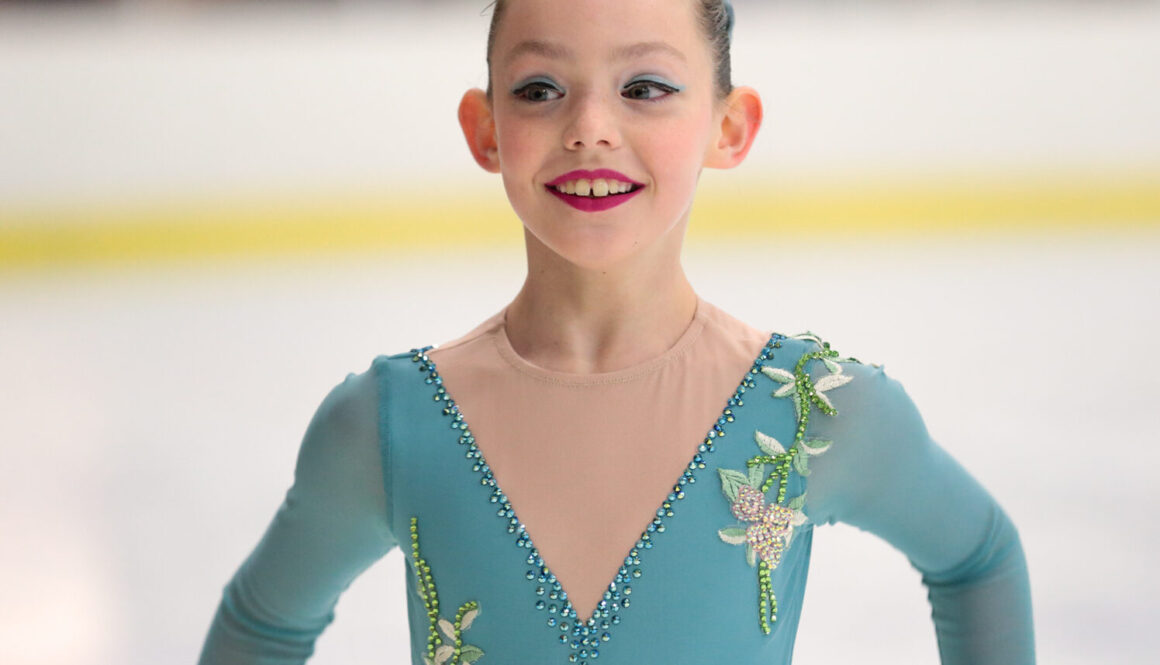


 For most competitive figure skaters, a year without competition might seem like a setback. But for Cape Town student Mikhail Ajam, the past season has been a lesson in patience, perspective, andthe rarely spoken challenges of finding the right partner in ice dance.
 From singles skating to synchro and eventually ice dance, his journey has never followed a straight line. “I was playing catch-up for years,” he reflects, pointing to struggles with his axel jump and a late start compared to many peers. “But when ice dance was introduced, something clicked. It became my discipline.”
 Off the ice, Mikhail is equally thoughtful. Living with ADHD and General Anxiety Disorder, he’s learned to embrace what once made him feel different. “For a long time, I was scared people would judge me. But I realised I can’t hide who I am. Music helps me manage the noise in my head, and skating gives me purpose.”
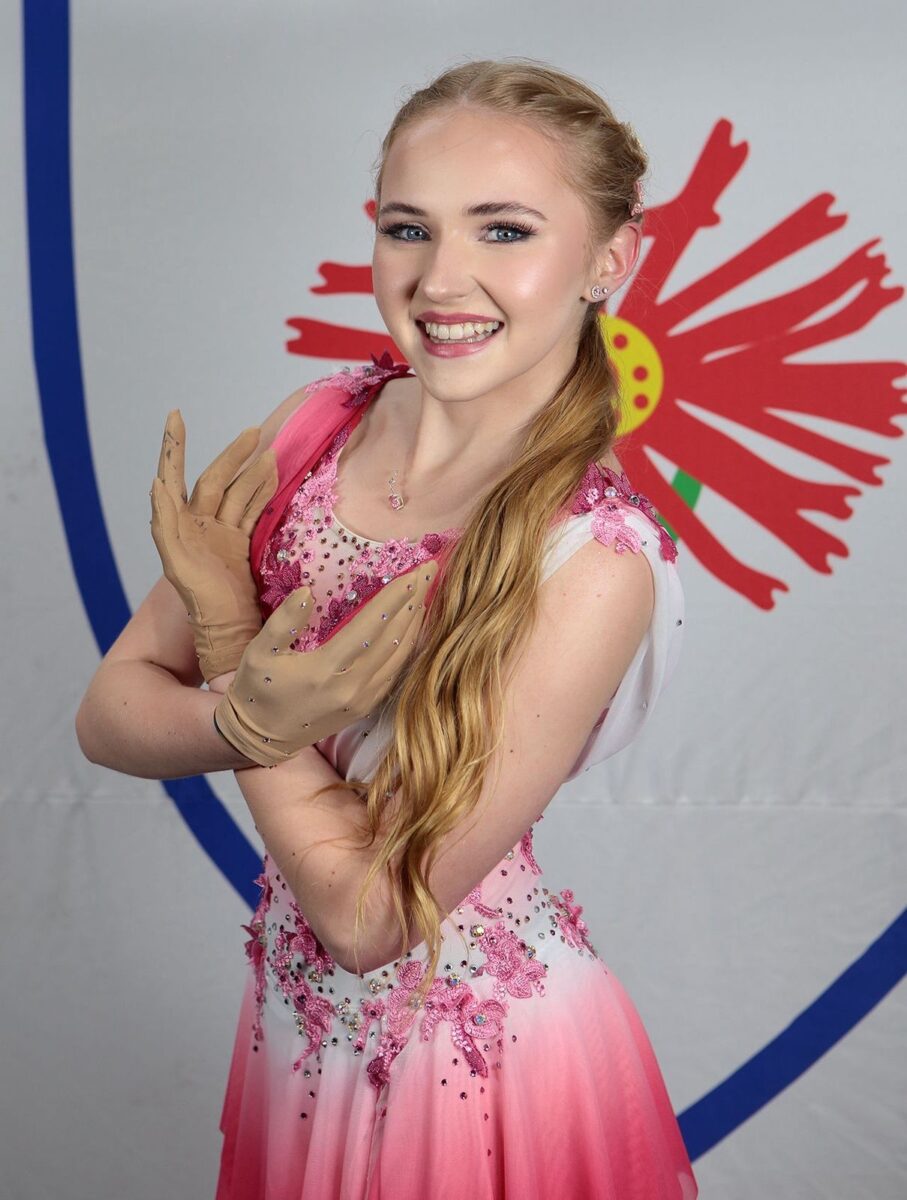 For most competitive skaters, the journey begins not long after they can walk. But for Mathilda du Plessis, it started with a promise.
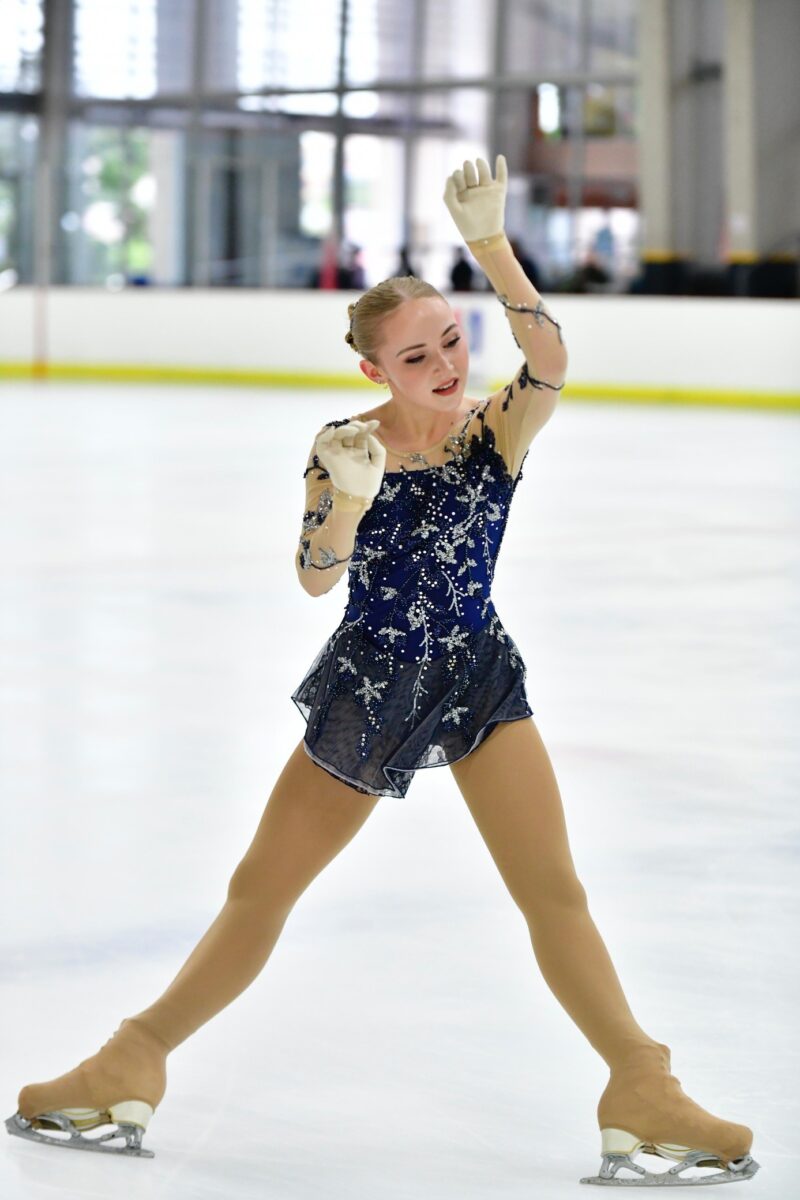 Now a first-year psychology student, Mathilda has shifted her focus from singles skating to ice dance and synchro, disciplines she says feel less pressured and more expressive.

 She was also excelling in classical dancing. This excellent grounding proved most beneficial when she decided to move from single skating into the then new discipline of Ice Dance.
 Felicity gives credit to her parents and coaches for what she has achieved so far. “My parents have been with me through my ups and downs. They have held my hand no matter what, even during my grumpy teenage phase.
 After more than two decades representing South Africa at the highest levels of international figure skating, Neil Garrard is stepping down from the ISU circuit. This marks the close of one of the continent’s most distinguished judging careers, defined by technical excellence, integrity, and a deep commitment to the sport he has served since 1965.
 The 2025 Advanced Novice High-Performance National title was never a certainty for 15-year-old Tristané Schmulian. In fact, Nationals almost didn’t even happen at all.


![SAFSA Socials 14[84]](https://safsa.org.za/wp-content/uploads/2025/05/SAFSA-Socials-1484-1200x1200-1160x665.jpg "SAFSA Socials 14[84]")


